Monday, January 5, 2026

Best Books of 2025: Ministry and Pastoral

I had the privilege of reading a large number of ministry-oriented books this year.  The volume of books is primarily due to the fact that I can walk for exercise in our church gym and read at the same time.  Of course, that means that I find I don’t have a lot of time to sit, read something deeper and take notes.  Sigh….

Here are the best books I read this year, and the rest.


God, Technology and the Christian Life by Tony Reinke.  A book on a Christian perspective regarding technology might be one that could get dated very quickly.  But Reinke’s book is not about specific technologies, but about the blessings and troublesome aspects of technology for a Christian.  It is incisive, balanced and sane in every respect and will, I believe, stand the test of time.

2084 and the AI Revolution:  How Artificial Intelligence Informs our Future by John C. Lennox.  This was a remarkable book about the growth and expansion of Artificial Intelligence (AI) in our society.  Lennox gives an excellent summary of the benefits and dangers of AI, as well as its limits.  His special focus is on the dreams of futurists, who postulate some kind of trans-humanism where AI and human beings merge.  In the last third of the book, he then holds those ideas up to the lens of Scripture.  Excellent stuff!

No Apologies:  Why Civilization Depends on the Strength of Men by Anthony Esolen.  Esolen’s book is well-written and strident, argued from a Roman Catholic perspective.  He faces down society’s assumption that masculinity is often toxic, dangerous and unnecessary in today’s world.  Esolen argues the opposite – that our world depends on masculine men who live their lives in conformity to the pattern laid down in God’s word.


Understanding Trauma:  A Biblical Introduction for Church Care by Steve Midgley.  Trauma is a word that is thrown around a lot today.  People assume everyone has trauma, which means that trauma can become an excuse for bad behavior.  Steve Midgley is a former psychologist who now directs Biblical Counseling UK.  In this brief book, he defines trauma and its causes, admits that often severe trauma requires some kind of professional, focused help, but also has many practical, ordinary ways that the church can care for and support those who have experienced trauma.


The Lord of Psalm 23:  Jesus our Shepherd, Companion and Host by David Gibson.  This book was a balm to my soul.  We have all read Psalm 23 – perhaps we have it memorized.  It is one of the most famous passages in the Bible.  In this book, David Gibson, walks slowly and carefully through the psalm, arguing that it ultimately points to the care and companionship that believers find in Jesus.


Radically Whole:  Gospel Healing for the Divided Heart by David Gibson.  Gibson’s book on Psalm 23 was so good, I also picked up his book on the letter of James.  Again, the book is wonderfully insightful.  Gibson argues James’ prevalent theme is the danger of the divided heart and he follows that theme into some powerful, thought-provoking interpretations and applications.

The Clay Pot Conspiracy:  God’s Plan to Use Weakness in Leaders by Dave Harvey.  My only regret in reading this book is that it was not printed prior to my current preaching series on 2 Corinthians.  Harvey’s book is at times hard to read – mainly because it is so challenging and convicting regarding our tendency as leaders to lead out of our own strength and reject or run from the path that God has actually laid out for us, which of course involves His strength and our weakness.


Songs of the Son:  Reading the Psalms with the Author of Hebrews by Daniel Stevens.  This book is the most surprising one on the list.  I was not sure what to expect when I started to read this beyond the fact that the topic was intriguing.  Stevens’ book explores every messianic psalm quoted in the book of Hebrews, interpreting it in its original context and then discussing how the author of Hebrews used it in his argument.  This is a fascinating read.

Lest We Drift:  Five Departure Dangers from the One True Gospel by Jared C. Wilson.  I have read a number of Jared Wilson books over the years, and I would put this one up with his best, including The Pastor’s Justification.  As the title makes clear, Wilson is warning church leaders about the many ways we can drift from a gospel-centered ministry focus.  His tone is urgent and his words are powerful.  For me, chapter 4 was worth the whole price of the book.


Other great reads from this year:

Tying the Knot:  A Premarital Guide to a Strong & Lasting Marriage by Rob Green

Truth in a Culture of Doubt:  Engaging Skeptical Challenges to the Bible by Andreas Kostenberger, Darrell Bock and Josh Chatraw

The Shepherd Leader:  Achieving Effective Shepherding in Your Church by Timothy Witmer

Blessed:  A History of the American Prosperity Gospel by Kate Bowler

Unearthing the Bible:  101 Archeological Discoveries that Bring the Bible to Life by Titus Kennedy

The Deconstruction of Christianity:  What it is, Why it’s destructive and how to Respond by Alisa  Childers and Tim Barnett

Happy Lies:  How a Movement you (probably) Never Heard of Shaped our Self-Obsessed World by Melissa Dougherty

A New Apostolic Reformation?  A Biblical Response to a Worldwide Movement by R.  Douglas Geivett and Holly Pivec

It’s Not Like Being Black:  How Sexual Activists Hijacked the Civil Rights Movement by Voddie T. Baucham Jr.

How to Lead Your Family:  A Guide for Men Wanting to be More by Joel R. Beeke

Expositional Leadership:  Shepherding God’s People from the Pulpit by R. Scott Pace and Jim Shaddix

Managing Your Households Well:  How Family Leadership Trains You for Church Leadership by  Chap Bettis

Dispensational Hermeneutics:  Interpretation Principles that Guide Dispensationalism’s Understanding of the Bible’s Storyline by Michael J. Vlach

The Air we Breathe:  How We all came to Believe in Freedom, Kindness, Progress and Equality by Glen Scrivener

J. R. R. Tolkien’s Sanctifying Myth:  Understanding Middle-Earth by Bradley Birzer

4 Chair Discipling:  Growing a Movement of Disciple-Makers by Dann Spader

The Immortal Mind:  A Neurosurgeon’s Case for the Existence of the Soul by Michael Egnor

Disciplines of a Godly Man by R. Kent Hughes

Respectable Sins by Jerry Bridges

Lies My Therapist Told Me:  Why Christians Should Aim for More than just Treating Symptoms by Greg Gifford

Holding the Rope:  How the Local Church can Care for its Sent Ones by Ryan Martin

Heart and Habits:  How We Change for Good by Greg E. Gifford

A Brief History of Sunday: From the New Testament to the New Creation by Justo Gonzalez

Mental Health and Your Church:  A Handbook for Biblical Care by Helen Thorne and Dr. Steve Midgley

They Smell Like Sheep:  Spiritual Leadership in the 21st Century by Lynn Anderson

Crazy Like Us:  The Globalization of the American Psyche by Ethan Watters

Pre-Millennialism:  Why there Must be a Future Earthly Kingdom of Jesus by Michael Vlach


Somewhat disappointing reads:

Roots & Rhythm:  A Life in Music by Charlie Peacock (I love Contemporary Christian Music, but Peacock’s autobiography is at times fascinating, but at others aimless and hard to follow.)


Best Books of 2025: Fiction

My fiction reading list for this year contains some of the usual suspects (Sanderson, Modesitt, Preston/Child and Box), but also some new authors I have enjoyed.  I greatly enjoyed the three Robert Harris books I read this year, but I was let down with the endings of each of them, which is why none of them made the “best of” list.  Here are the best fiction books I read this year, and the rest (which include 2 “fiction-adjacent” books).

Wind and Truth by Brandon Sanderson (Stormlight Archive #5).  Weighing in at over 1300 (!!) pages, this is the 5th installment of Sanderson’s Stormlight series.  This series is meant to be 10 books in all, and Sanderson ties up many plot lines in this book.  Apparently book 6 will start some new plot lines.  Even at its length and the time it took me to read it, it was compelling all the way through.  Cannot wait for #6.

From the Forest by L. E. Modesitt Jr.  Modesitt’s Recluse books are comfort fiction for me.  In some ways, every book or mini-series of books are structured the same way, but for me they are immersive, engrossing and different enough to hold my interest.  Soon I hope to pick up the next book, which apparently contains the same main character as found in From the Forest.

Of Darkness and Light by Ryan Cahill (Bound and Broken series #2)  I read the first of this series last year and enjoyed it.  I read a short novella set in the same world (see below).  But with book number 2, Cahill’s writing and storytelling skills have advanced.  I found this book much more enjoyable and captivating than his previous book, which bodes well for the series.

Isles of the Emberdark by Brandon Sanderson (Secret Projects #5)  A few years ago, Brandon Sanderson broke the Internet and set Kickstarter records for his Secret Project novels.  I did not subscribe, but have picked up all the books over time.  Isles is the surprise 5th book in the project.  It is more science fiction than fantasy, but Sanderson’s world building is great and I would say this is probably my second favorite of the Secret Project books.

The Word is Murder by Anthony Horowitz (Hawthrone and Horowitz #1).  This is a unique murder mystery, in that the author, Anthony Horowitz, is actually a main character in the series.  In the book, he partners with Hawthorne, a secretive, enigmatic and brilliant detective.  Horowitz writes himself in to the book – as a best-selling mystery writer – and together they make an interesting pair.  Looking forward to read the second installment.

Bloodless by Douglas Preston and Lincoln Child (Pendergast series)  It has been a few years since I have read a Pendergast book – I have a few to catch up on.  Bloodless is classic Preston and Child – well-written and plotted, intriguing with a bit of para-normal (parallel universes here) added in.  It’s a page turner!


Other great reads that did not get into the “best” list:

The Fall by Ryan Cahill (Bound and Broken novella)

An Officer and a Spy by Robert Harris

Death in Delft by Graham Brack

Age of Assassins by R J Barker (Wounded Kingdom, #1)

Pompeii by Robert Harris

Nowhere to Run by C. J. Box (Joe Pickett #10)

The Second Sleep by Robert Harris

The House of Silk by Anthony Horowitz

Cold Wind by C. J. Box (Joe Pickett #11)

The Maps of Middle-Earth by Brian Sibley


Somewhat Disappointing Reads:

Origins of the Wheel of Time:  The Legends and Mythologies that Inspired Robert Jordan by Michael Livingston (biographical information about Jordan is fascinating, the rest disappointing as it did not add any new information about Jordan’s great series)

Best Books of 2025 - History and Biography

We have come to the end of 2025, and I have once again compiled a list of the best books I read this year, as well as a quick catalog of those which did not make the “best” list.  As in past years, I have divided these lists into three groups – history/biography, fiction and ministry-oriented books. 
  Here are the best history/biography books I read this past year.

Cassino ’44:  The Brutal Battle for Rome by James Holland.  James Holland continues to make my “best of” list year after year.  I consider him one of the best, but also one of the most prolific history writers I regularly read.  This book, as the title makes clear, is about the fighting in Italy in 1944, with a specific focus on the many ways the Allies tried to assault and out-flank the German fortress at Monte Cassino.

An Ordinary Man:  The Surprising Life and Historic Presidency of Gerald R. Ford by Richard Norton Smith.  I am not sure Gerald Ford would make anyone’s list of the “best” presidents in American history.  He wasn’t the worst president either.  Rather, as the title suggests, he was an ordinary man who, due to Richard Nixon’s scandals, was thrust into the office of President.  There in the White House, Ford brought healing to a nation and returned dignity to an office tarnished by scandal.

Stopping the Panzers:  The Untold Story of D-Day
by Marc Milner. Usually, a book that claims to have an “untold story” is one I tend to avoid, but I am glad I read this one.  Milner argues that the Allied commanders prior to D-Day deduced where the German counterattack against the D-Day beaches would fall and intentionally beefed up the Canadian 3rd Division with extra armor and artillery to face and defeat the German attack, which is exactly what happened in the days immediately after the D-Day assault.

The Vietnam War:  A Military History by Geoffrey Wawro.  There have many books written about Vietnam since the war ended, but often they have as much content about the politics of Vietnam as the war itself.  This book focuses primarily on the military action of the war and the thing that Wawro shows most clearly is the how the US troops, often fighting bravely, were betrayed by the absolute aimlessness and futility of the American strategy during most of the war. 

The Fate of the Day - The War in America: Fort Ticonderoga to Charleston, 1777-1780 by Rick Atkinson.  Atkinson is another of the best historians out there today.  This book is the second in his trilogy about the American Revolutionary War.  Atkinson is as adept at describing strategy and battlefield action as he is in portraying the debates and decisions of politicians and leaders on both sides of the Atlantic.

Mark Twain by Ron Chernow.  Chernow is one of the best biographers writing today.  His book on Mark Twain is long, exhaustive and excellent.  But the story is so tragic, it was a difficult book to finish for me.  Twain’s continual pursuit of wealth led to him being bilked by many fraudsters.  His family life was a story of death after death, with only one daughter surviving him.  And his views of God and faith were utterly bankrupt.  All in all, it is a story of a great, but tragic man.

Shots Heard Round the World:  America, Britain, and Europe in the Revolutionary War by John Ferling.  Ferling’s book is a top-down survey of the American Revolution, with a special emphasis on how the war impacted nations around the world and especially in Europe.  Many books on the American Revolution have been written, but Ferling has focused on an angle that has seldom been fully explored.

The Killing Season: The Autumn of 1914, Ypres, and the Afternoon that Cost Germany a War by Robert Cowley.  Cowley’s book is set during the opening months of World War 1.  Trench warfare has not fully set in and both sides are racing toward the Atlantic, trying to outflank each other before the ocean was reached.  The last and greatest opportunity for German victory in 1914 was the area around the Belgian city of Ypres and it was here that the newest German army, filled with half-trained reservists, met its end. A fascinating but also grim book.


Great Books, just not quite making it to the Best list:

God’s Samurai:  Lead Pilot at Pearl Harbor by Gordon Prange, Donald Goldstein and Katherine Dillon

Operation Paperclip:  The Secret Intelligence Program that Brought Nazi Scientists to America by Annie Jacobsen

To Overthrow the World:  The Rise and Fall and Rise of Communism by Sean McMeekin

The Last Million:  Europe’s Displaced Persons from World War to Cold War by David Nasaw

This Fierce People:  The Untold Story of America’s Revolutionary War in the South by Alan Pell Crawford

Alexander at the End of the World:  The Forgotten Final Years of Alexander the Great by Rachel Kousser

Gustavus v. Wallenstein:  Military Revolution, Rivalry & Tragedy in the Thirty Years War by John Pike

Fight to the Finish: Canadians in the Second World War, 1944-45 by Tim Cook

Watergate:  A New History by Garrett M. Graff

Deadwood:  Gold, Guns and Greed in the American West by Peter Cozzens

Canada’s Air Force:  The Royal Canadian Air Force at 100 by David J. Bercuson

Victory ’45:  The End of the War in Eight Surrenders by James Holland and Al Murray

Battle of Britain:  Canadian Airmen in Their Finest Hour by Ted Barris

The Blood in Winter:  England on the Brink of Civil War, 1642 by Jonathon Healey

The Good Allies:  How Canada and the United States Fought Together to Defeat Fascism during the Second World War by Tim Cook


Somewhat Disappointing:

Salvation on Sand Mountain:  Snake Handling and Redemption in Southern Appalachia by Dennis Covington

Thursday, January 16, 2025

Best Reads for 2024 - Pastoral and Ministry

Because of my new gym walking habit, I read more books in this category than any other.  As a result, a picked a few more “best” books than I usually choose.  Honestly, I could have picked 10 more books in the “best” category – picking the couple handfuls I did was challenging.

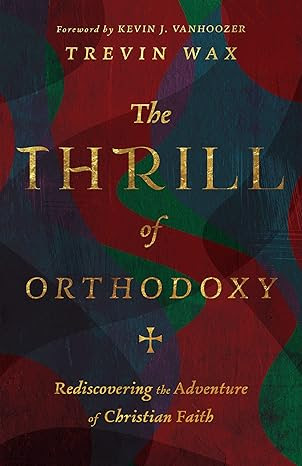
The Thrill of Orthodoxy:  Rediscovering the Adventure of Christian Faith by Trevin Wax.  This book is an amazing reminder of the awesome nature of Christian orthodoxy.  Wax does an especially good job of addressing the various ways our modern world, under the guise of theological or personal freedom, actually narrows and limits the remarkable things God offers us in Jesus Christ.  Progressive society, which thinks it has more freedom, has actually settled for much less than God offers us in Christ.

Competing Spectacles:  Treasuring Christ in the Media Age by Tony Reinke.  At first glance, I thought this was a worldview books with spectacles being the lens through which we see the world.  But in actuality, when Reinke speaks of spectacles, he is speaking of the way the world around us seeks to draw attention to itself (celebrities, politics, etc.).  Reinke argues that no matter how attractive or absorbing the spectacle is that society offers us, the ultimate “spectacle” that should draw our attention is Christ crucified.


Ministry in the New Realm:  A Theology of 2 Corinthians by Dane C. Ortlund.  As I prepared to preach through the book of 2 Corinthians in church, I read this wonderful little book as preparation.  I am so glad I did.  Ortlund does a wonderful job of drawing out the themes in this magnificent book, enabling the busy pastor to get a birds-eye view of the book and greatly aiding his preparation.


The Anxious Generation: How the Great Rewiring of Childhood is Causing an Epidemic of Mental Illness by Jonathan Haidt.  This is the first book on my “best” list that was not written by a Christian, but is so timely and helpful in so much of what is going on in the world.  Haidt argues that smart phones, social media and online gaming have changed childhood, bringing with them increased anxiety, immaturity, depression, and many other problems. 


Truth We Can Touch:  How Baptism and Communion Shape our Lives by Tim Chester.  This short book is a excellent book on the ordinances/sacraments of baptism and the Lord’s Supper.  Chester is a bit more “presbyterian” than me, so I did not agree with him on everything, but despite that the book is excellent for bringing out the deeper meaning and prompting personal reflection regarding these tangible gifts from God that provide pictures of our salvation.


Bad Therapy:  Why the Kids aren’t Growing Up by Abigail Shrier.  This is the other ministry “best” book not written by a believer.  That said, this is a remarkable expose of how the so-called therapy that is offered our kids, especially in public schools, is so damaging.  Continually hunting for trauma, foregoing actual parenting, “saving” kids from any risk that actually brings growth and resilience, and over medicating them are some of the many issues Shrier addresses.  And she is very clear – both therapists and parents are guilty in equal measure.


Shepherds for Sale:  How Evangelical Leaders Traded the Truth for a Leftist Agenda by Megan Basham.  This book was a bit terrifying.  Basham has the evidence of how prominent pastors have been bought and paid for by leftist organizations to promote their agendas under the guise of biblical truth.  Others have fallen into the trap of being so enamored by the attention of the secular media that they are willing to fudge truth for the praise of men.  A wonderful reminder to me – preach the Word!


You’re Only Human:  How Your Limits Reflect God’s Design and Why That’s Good News by Kelly M. Kapic.  As a person who has, in the past, had a tendency to work too many hours and not take enough time off, Kapic’s book is a good reminder.  He speaks of all the ways we are limited as human beings and how those limits, rather than being a curse or a frustration, are actually blessings God has built into our lives.


Uprooting Anger:  Biblical Help for a Common Problem by Robert D. Jones.  This book so wonderfully biblical.  As a person who has struggled with anger in the past and a person who has to counsel others struggling with anger, this book has so much practical, Scriptural wisdom.  It will be a wonderful tool to share with others or use as a basis for counseling.


The Heart of Jesus:  How He Really Feels about You by Dane Ortlund.  This little book – only 100 pages – is a distillation of Ortlund’s book Gentle and Lowly.  Although I read and enjoyed Gentle and Lowly, this book is wonderful because the same truths are there, but in a package that is much more digestible and much less intimidating for those who are not avid readers.  What is the heart of Jesus toward you?  Read it and find out!


Great books, but did not make it into the “best” category:

Trusting God even when Life Hurts by Jerry Bridges

Warfield on the Christian Life:  Living Life in the Light of the Gospel by Fred G. Zaspel

Letter to the American Church by Eric Metaxas

Voices from the Past, vol. 2, by Richard Rushing, ed. 

Owen on the Christian Life:  Living for the Glory of God in Christ by Matthew Barrett and Michael A. G. Haykin

Word Centered Church:  How Scripture Brings Life and Growth to God’s People by Jonathan Leeman

God’s Grand Design:  The Theological Vision of Jonathon Edwards by Sean Michael Lucas

Understanding Scripture:  An Overview of the Bible’s Origin, Reliability and Meaning by Wayne Grudem, C. John Collins, and Thomas Schreiner, eds

The Flourishing Pastor:  Recovering the Lost Art of Shepherd Leadership by Tom Nelson

The Toxic War on Masculinity:  How Christianity Reconciles the Sexes by Nancy R. Pearcey

Heart of the Holy Land:  40 Reflections on Scripture and Place by Paul H. Wright

The Saints of Zion:  An Introduction to Mormon Theology by Travis S. Kerns

Is the Commission Still Great?  8 Myths about Missions & What they Mean for the Church by Steve Richardson

Can We Trust the Gospels? By Peter J. Williams

Israel and the Church:  An Israeli Examines God’s Unfolding Plans for His Chosen People by Amir Tsarfati

Reactivity:  How the Gospel Transforms our Actions and Reactions by Paul David Tripp

Gospel-Shaped Marriage:  Grace for Sinners to Love like Saints by Chad and Emily Dixhoorn

The New Creation Model:  A Paradigm for Discovering God’s Restoration Purposes from Creation to New Creation by Michael Vlach

Malachi:  God’s Unchanging Love by Walter C. Kaiser Jr.

Seeking Allah, Finding Jesus:  A Devout Muslim Encounters Christianity by Nabeel Qureshi

From Weakness to Strength:  8 Vulnerabilities that can Bring out the Best in your Leadership by Scott Sauls

Crucial Accountability:  Tools for Resolving Violated Expectations, Broken Commitments, and Bad Behavior by Patterson, Grenny, Maxfield, McMillan, Switzler

Live Your Truth and Other Lies:  Exposing Popular Deceptions that make us Anxious, Exhausted and Self-Obsessed by Alisa Childers

The Advantage:  Why Organizational Health Trumps everything else in Business by Patrick Lencioni

The Titus Ten:  Foundations for Godly Manhood by J. Josh Smith

The Joy Switch:  How your Brain’s Secret Circuit Affects your Relationships – and how you can Activate it by Chris M. Coursey

The Prodigal God:  Recovering the Heart of the Christian Faith by Timothy Keller

The Secular Creed:  Engaging Five Contemporary Claims by Rebecca McLaughlin

Social Justice Fallacies by Thomas Sowell

The Unwavering Pastor:  Leading the Church with Grace in Divisive Times by Jonathan K. Dodson

Reforming Joy:  A Conversation between Paul, the Reformers and the Church Today by Tim Chester

Budgeting for a Healthy Church:  Aligning Finances with Biblical Priorities for Ministry by Jamie Dunlop


Monday, January 6, 2025

Best Reads of 2024 – Fiction

Here are the best fiction books I read this year.  Nothing disappointing on this list, but there are definitely some series that I started and were good, but in the long run not worth my time to continue.  As should be obvious from my list, this is the year I discovered C. J.  Box’s Joe Pickett series.  I have not read as many books from a single series in one year for a long time.

I am currently reading the latest Brandon Sanderson Stormlight book, and it will be followed by the last book in Tad Williams’ current fantasy series (Last King of Osten Ard) -  I am pretty sure both of these books will show up on next year’s best list.


Open Season by C. J. Box.  This is the first of Box’s Joe Pickett series.  Just about any of the books listed below could be here in the best list – Open Season is probably not his best.  But none of the 9 I read were anything but excellent.  Joe Pickett is a game warden in Wyoming who regularly finds himself in the midst of a murder or other kind of mystery.  The TV series streaming on Paramount got me interested and while I enjoyed the TV show, the books are just wonderful.  Nothing too deep – just a fun, fast-paced adventure/mystery/thriller.  A perfect “comfort food” read.

Yumi and the Nightmare Painter by Brandon Sanderson.  This one surprised me.  Brandon Sanderson broke Kickstarter a year or two ago with his secret project books.  Crowd-funded $41 million for them!  I did not join, but picked up the books after release.  I really enjoyed Tress (on last year’s best list) but I thought my favorite would be The Frugal Wizard’s Handbook (see below).  That was actually me least favorite of the 4.  Yumi was the book I was not sure I would even buy, but I am so glad I did, because it was another favorite.


The Bookseller of Inverness by S. G. MacLean.  Another surprise.  This was a $0.99 deal on Kindle at Amazon.  I like good historical fiction, so I thought I would give it a try.  Set in Scotland in the 18th century, this book is mystery set in the years after Bonnie Prince Charlie’s rebellion that ended at the battle of Culloden.  Slow-moving, but very absorbing and atmospheric, this is historical mystery writing at its best; it gives C. J. Sansom, one of my favorite authors, a run for his money.  Looking forward to more of her books this year.

The Bone Ships by R. J. Barker.  A third surprise and another super cheap Kindle purchase.  This is the first book of the Tide Child Trilogy.  Barker does some wonderful world-building, creating a fantasy world ruled by sea power and ships that are crafted from the bones of sea monsters.  But, what happens when the sea monsters die off?  Or when one last sea monster appears again?  This is swashbuckling naval adventure at its finest.  And the best part – no foul language and no sexual content!  Just a great story.


Imperium: A Novel of Ancient Rome by Robert Harris.  A fourth surprise.  I read and enjoyed Conclave by Harris and found one of his historical fiction novels set in ancient Rome for a few dollars on Amazon.  This is really excellent – the first book of a series on the life of lawyer Marcus Cicero.  It is full of Roman political machinations and legal drama – almost like an ancient, early day John Grisham novel (think The Pelican Brief or The Firm, just set in ancient Rome).  I look forward to the rest of the series.


Other good reads, just not on the “best” list:

Children of Time by Adrian Tchaikovsky

Artemis by Andy Weir

The Collapsing Empire by John Scalzi (Interdependency, #1)

The Consuming Fire by John Scalzi (Interdependency, #2)

The Last Emperox by John Scalzi (Interdependency, #3)

Savage Run by C. J. Box (Joe Pickett #2)

Winterkill by C. J. Box (Joe Picket #3)

The Frugal Wizards’ Handbook for Surviving Medieval England by Brandon Sanderson

The Sunlit Man by Brandon Sanderson

The Tower of Fools by Andrzej Sapkowski (Hussite Trilogy, #1)

Trophy Hunt by C. J. Box (Joe Pickett #4)

Out of Range by C. J. Box (Joe Pickett #5)

In Plain Sight by C. J. Box (Joe Pickett #6)

Free Fire by C. J. Box (Joe Pickett #7)

Blood Trail by C. J. Box (Joe Pickett #8)

Below Zero by C. J. Box (Joe Pickett #9)

Dragons of Deceit by Margaret Weis and Tracy Hickman (Dragonlance Destinies, #1)

Conclave by Robert Harris


Best Reads of 2024 - History and Biography

Entering the New Year, I look back at my reading list from the past year.  This year, I hit a personal record 103 books read for the year, but I almost consider that number cheating.  In the summer of 2023, I started reading during my walking “coffee breaks” during days in the office.  I walk a mile in the gym and read while I do it.  Thus, I have managed to go through a few more books than I have in past years.  Of course, the books I read while gym walking are not deep, 500-page theological tomes – who wants to carry that around, plus I often read those with a note pad alongside.  That said, some of the “gym walking” books made it into my list of best books of 2024. 

One book that is not listed in any of these posts does not fit any category but was hugely impactful in my life.  As a guy who struggles with blood sugar issues, I would highly recommend Glucose Revolution: The Life-Changing Power of Balancing Your Blood Sugar by Jessie Inchauspe to anyone who needs it. 

Here is a list of the best history and biography books I read this year, along with others I would recommend and a few that disappointed.

The Savage Storm:  The Battle for Italy, 1943 by James Holland.  James Holland’s books occur regularly on my “best of” lists.  He is one of my favorite military historians right now – a great blend of scholarship, insight and a writing style that drives the story in a novel-like fashion.  This book is about the American, British and Canadian invasions of Italy and the battles that followed.  I am currently reading the sequel to this book – Cassino, 1944 – which carries the story on into central Italy.  In addition, check out his informative and chatty podcast – We Have Ways of Making You Talk.


The Necessary War:  Canadians Fighting the Second World War 1939-1943, vol. 1 by Tim Cook.  Tim Cook also shows up regularly on my best list – he is one of the best Canadian military historians writing currently.  The Necessary War is the first volume of his history of the Canadian military during World War 2.  He covers it all – land, sea and air – with an interesting style, discussing both the decisions made in Ottawa as well as the experiences of the average soldier, sailor and flyer.  Volume 2 – Fight to the Finish – is in my “to read” pile for this year.

King:  A Life by Jonathon Eig.  This is a fascinating and very balanced biography of Martin Luther King Jr.  Eig does not stand him on a pedestal, but neither does he spend the whole book in character assassination.  There is much about Dr. King that is praiseworthy, like his courage and commitment to civil rights that was rooted in a biblical foundation.  That said, Dr. King was far from a paragon of personal virtue – the book makes it clear he was a serial adulterer during his lengthy marriage to his wife.


The Coming of the Third Reich by Richard J. Evans.  The years between the world wars of the 20th century were a painful, troubled time, nowhere more so in Interwar Germany.  The Coming of the Third Reich is the first volume in Evans’ trilogy on the Nazi Party prior to and during World War 2.  In this volume, Evans tells the story of how the political and economic fiasco that was the Weimar Republic ushered in circumstances that enabled Hitler to from obscurity to power in a few short years.


The Cold War:  A New History by John Lewis Gaddis.  We have achieved enough historical distance from events such as the Cold War to enable historians to write insightful books about those events.  Gaddis’ book is an example of this – this is high level history that shows the trends and decisions of those decades, whether made in Washington or Moscow, and focuses especially on the importance of individual actors (Pope John Paul II, Reagan, Thatcher, Solidarity in Poland) who made choices and took stands that finally broke the world out of the Cold War stasis.

Challenger:  A True Story of Heroism and Disaster on the Edge of Space by Adam Higginbotham. I am not an engineer – I leave that to sons-in-laws and nephews – but even as a non-engineer, I was both fascinated and horrified by this book.  It reads like a gripping detective story; a cover-up of serious design flaws in the Space Shuttle and the brave people who risked their livelihood to expose them against the will of government functionaries.  Unfortunately, good people had to die before that happened.  And as Higginbotham makes clear, even after the Challenger disaster, the bureaucrats at NASA did not learn their lesson.


Revenge of the Tipping Point:  Overstories, Superspreaders and the Rise of Social Engineering by Malcolm Gladwell.  My brother-in-law Stephen has recommended Gladwell’s books to me more than once.  When I saw this one on sale at Costco, I figured I would give it a try.  What a fascinating book.  Gladwell is the one who popularized the idea of a “tipping point” that brings about change.  But what happens when the tipping point is misused, manipulated or leads to tragedy?  What happens when people use the tipping point as an opportunity for social engineering?  Covering topics like COVID-19, gay marriage and opioid epidemic, Gladwell shows what happens when the tipping point becomes a tool in the hands of society.


The Eastern Front:  A History of the Great War, 1914-1918 by Nick Lloyd.  This is a follow-up to Lloyd’s previous book on the Western
Front in World War 1.  Lloyd covers the initial battles on the Russian front, the battles over Serbia, the Italian front, the war in the Balkans and the immediate aftermath of the Russian Revolution of 1917.  Especially fascinating are his discussions of the relationship between Germany and its weaker partner Austria-Hungary as well as the internal debates of the leaders of the Entente about where and how to use their military resources to bring about victory on the battlefield.


More great books, although not quite good enough to make it to my best list:

Leyte Gulf:  A New History of the World’s Largest Sea Battle by Mark E. Stille

Pax:  War and Peace in Rome’s Golden Age by Tom Holland

The Blazing World:  A New History of Revolutionary England, 1603-1689 by Jonathon Healey

Our Last Best Chance: The Pursuit of Peace in a Time of Peril by King Abdullah II of Jordan

Our Ancient Faith:  Lincoln, Democracy and the American Experiment by Allen C. Guelzo

There Will be Fire:  Margaret Thatcher, the IRA and Two Minutes that Changed History by Rory Caroll

The Impulse of Victory:  Ulysses S. Grant at Chattanooga by David A Powell

The Murder of Jim Fisk for the Love of Josie Mansfield by H. W. Brands

The Mounties March West:  The Epic Trek and Early Adventures of the Mounted Police by Tony Hollihan

President Garfield:  From Radical to Unifier by C. W. Goodyear

The Rise of the G. I. Army: 1940-41, The Forgotten Story of How America Forged a Powerful Army Before Pearl Harbor by Paul Dickson

The Wide, Wide Sea:  Imperial Ambition, First Contact and the Fateful Final Voyage of Captain James Cook by Hampton Sides

Throne of Grace:  A Mountain Man, An Epic Adventure and the Bloody Conquest of the American West by Bob Drury and Tom Clavin

Left for Dead:  Shipwreck, Treachery and Survival at the Edge of the World by Eric Jay Dolin

Monte Cassino:  Ten Armies in Hell by Peter Caddick-Adams

Against All Odds:   The Untold Story of Canada’s Unlikely Hockey Heroes by P. J. Naworynski

Stampede:  Gold Fever and Disaster in the Klondike by Brian Castner

The End of Everything:  How Wars Descend into Annihilation by Victor Davis Hanson

An Unfinished Love Story:  A Personal History of the 1960’s by Doris Kearns Goodwin

Checkpoint Charlie:  The Cold War, the Berlin Wall and the Most Dangerous Place on Earth by Iain MacGregor

Snow and Steel:  The Battle of the Bulge 1944-45 by Peter Caddick-Adams

White Knights in the Black Orchestra:  The Extraordinary Story of the Germans who Resisted Hitler by Tom Dunkel

The Holy Fox:  The Life of Lord Halifax by Andrew Roberts

House of Lilies:  The Dynasty that made Medieval France by Justine Firnhaber-Baker

Henry V:  The Astonishing Triumph of England’s Greatest Warrior King by Dan Jones

The Darkest Summer: Pusan and Inchon 1950: The Battles That Saved South Korea--and the Marines--from Extinction by Bill Sloan


Books that disappointed on some level:

Children of Ash and Elm:  A History of the Vikings by Neil Price (he lost me when he mused extensively about “transgender Vikings…”)

Battle for the Island Kingdom:  England’s Destiny 1000-1066 by Don Hollway ( I am not sure how one can make such an interesting time filled with interesting characters such a dull read)