Wednesday, January 4, 2017

Best Books of 2016 - History/Biography

I enjoy history and good biography – I have a book like this going all the time.  As you can see, I had a strange fascination with the books of Ken McGoogan and the history of the American West this year.  We will see what next year brings.

Here the books that stood out this year.

Custer’s Trials:  A Life on the Frontier of a New America by T. J. Stiles.  I always look forward to a new T. J. Stiles book.  In this book, Stiles portrays George Armstrong Custer, the Civil War hero slain at the battle of Little Bighorn.  Custer is portrayed as a man out of a place in the developing United States.  The only thing he does well is fight, which is what ultimately killed him.

Alexander Hamilton by Ron Chernow.  While I realize the Hamilton is a Broadway sensation, I read this book to learn more about a man who is at times vilified, at other times forgotten as a founding father of America.  Chernow is an excellent biographer – his portrait is exhaustive, highlighting Hamilton’s brilliance as well as his failings.

A Time for Trumpets:  The Untold Story of the Battle of the Bulge by Charles B. MacDonald.  Written in the 1980’s, MacDonald’s book may have been superseded by newer research, but very few books do as well communicating the storyline of the grimmest battle on the Western Front during World War 2.  MacDonald was a participant, serving as a company commander in the midst of the fighting in Belgium.

One Day In August:  The Untold Story Behind Canada’s Tragedy at Dieppe by David O’Keefe.  The raid on Dieppe during World War 2 is part of the Canadian identity, and one of its tragedies.  Part of the reason for the tragedy is that no one really knows why so many lives were wasted for an operation that seemed to have no purpose.  O’Keefe, using new research, seeks to shed light on the hidden purpose for the costly raid.

Fatal Passage:  The Untold Story of John Rae, the Arctic Adventurer who Discovered the Fate of Franklin by Ken McGoogan.  Easily the best history/biography book I read this past year.  I am fascinated by Arctic exploration, and John Rae is one of the unsung heroes of it.  His accomplishments are many, including the first to find evidence of the lost Franklin expedition, even though today he is virtually unknown.
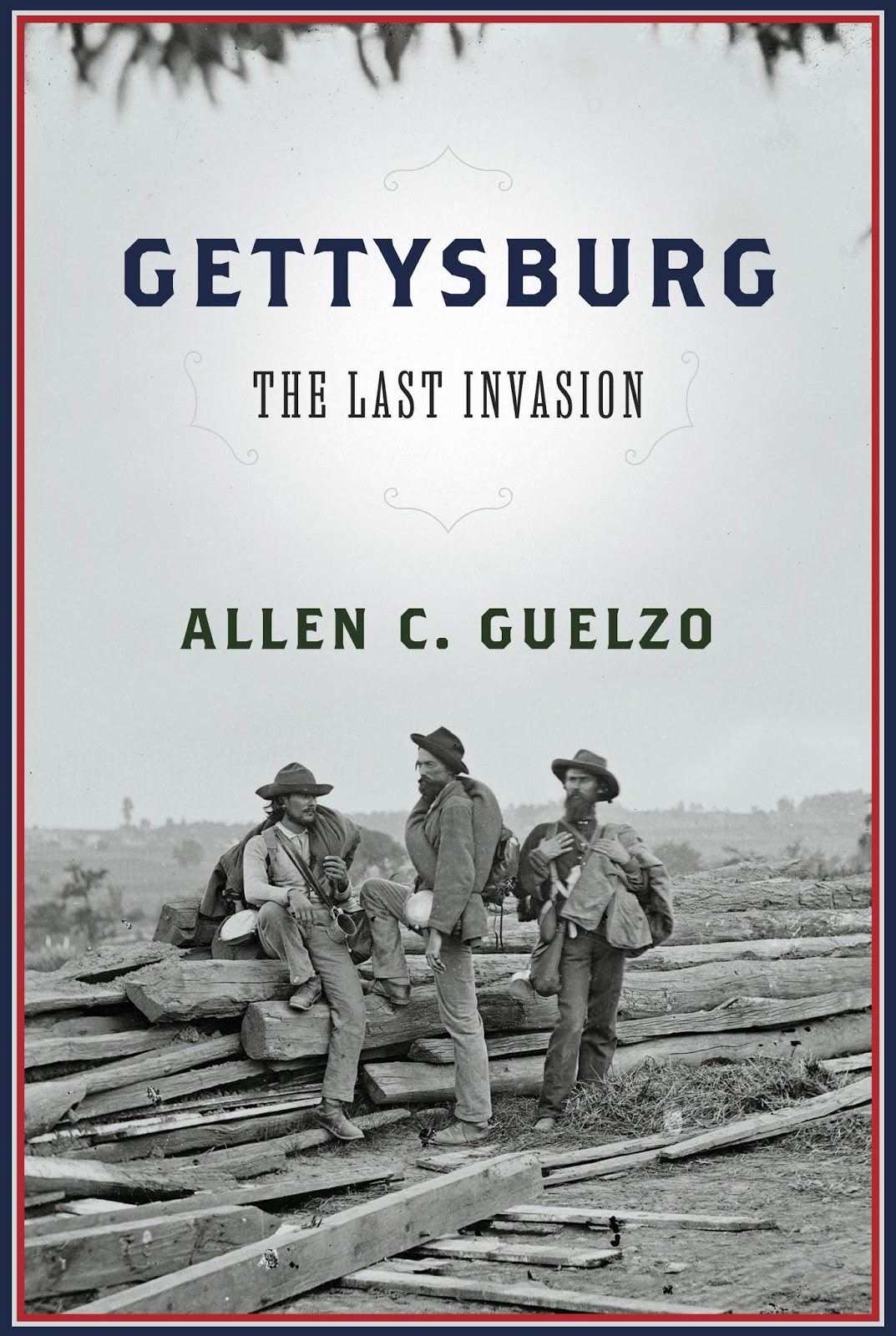
 
Gettysburg:  The Last Invasion by Allen C. Guelzo.  The second best history/biography book I read this year.  Many people have written many pages about the battle of Gettysburg, few have done it with such an excellent blend of writing and research.  I am looking forward to reading more of Guelzo’s books – I already have Abraham Lincoln: Redeemer President on my short list.

The Earth is Weeping:  The Epic Story of the Indian Wars for the American West by Peter Cozzens.  The story of the Indian wars in the west has been told many times, most famously from the perspective of the Indian in books like Bury My Heart at Wounded Knee.  Cozzens’ portrayal of this period of American history is brilliant, well-written and profoundly balanced.

Those are the best, here are the rest (in no particular order):

2nd Tier books – very good, recommended.
Double Cross:  The True Story of the D-Day Spies by Ben Macintyre
Fierce Patriot:  The Tangled Lives of William Tecumseh Sherman by Robert L. O’Connell (honorable mention)
Grant’s Final Victory:  Ulysses S. Grant’s Heroic Last Year by Charles Bracelen Flood
Strangers on a Bridge:  The Case of Colonel Abel and Francis Gary Powers by James B. Donovan (the true story behind the movie)
Last Stand:  George Bird Grinnell, the Battle to Save the Buffalo, and the Birth of the New West by Michael Punke
The Black Count:  Glory, Revolution, Betrayal, and the Real Count of Monte Cristo by Tom Reiss
Geronimo by Robert M. Utley
Escape from Davao:  The Forgotten Story of the Most Daring Prison Break of the Pacific War by John D. Lukacs
The Plantagenets: The Warrior Kings and Queens who made England by Dan Jones
The Wilderness Warrior:  Theodore Roosevelt and the Crusade for America by Douglas Brinkley
The Immortal Irishman:  The Irish Revolutionary who became an American Hero by Timothy Egan (Montana’s first governor)
A Decent, Orderly Lynching:  The Montana Vigilantes by Frederik Allen
Astoria:  Astor and Jefferson’s Lost Pacific Empire by Peter Stark
Tragedy at Dieppe:  Operation Jubilee, August 19, 1942 by Mark Zuehlke
How the Scots Invented Canada by Ken McGoogan
Wrecked in Yellowstone:  Greed, Obsession and the untold Story of Yellowstone’s Most Infamous Shipwreck by Mike Stark
The Wars of the Roses:  The Fall of the Plantagenets and the Rise of the Tudors by Dan Jones 
The General:  Charles De Gaulle and the France He Saved by Jonathon Fenby
Ancient Mariner:  The Arctic Adventures of Samuel Hearne, the Sailor who Inspired Coleridge’s Masterpiece by Ken McGoogan
If You Can Keep it:  The Forgotten Promise of American Liberty by Eric Metaxas
Valour Road by John Nadler (3 World War 1 heroes from the same Winnipeg street)
The Norman Conquest:  The Battle of Hastings and the Fall of Anglo-Saxon England by Marc Morris
Empire of the Summer Moon by S.  C. Gwynne
Augustus:  First Emperor of Rome by Adrian Goldsworthy (honorable mention)
Brilliant Disaster:  JFK, Castro and America’s Doomed Invasion of Cuba’s Bay of Pigs by Jim Rasenberger
Lady Franklin’s Revenge:  A True Story of Ambition, Obsessions and the Remaking of Arctic History by Ken McGoogan (honorable mention)
MacArthur at War:  World War 2 in the Pacific by Walter Borneman
The Greatest Knight by Thomas Asbridge

3rd Tier reads – good, but somewhat disappointing:
The Romanovs 1613-1918 by Simon Sebag Montefiore


Tuesday, January 3, 2017

Best Books of 2016 – Christian and Pastoral

It has come to that time of year again when I look back at the books I have read in the past year, and highlight the best ones.  As I have done in the past, I have grouped them into three broad categories – Christian/Pastoral, History/Biography and Fiction.

I had the privilege of reading a number of very good Christian books this year.  The best of them had a profound impact on me personally, which has filtered down to have a profound impact on my ministry and church life.  (That is how it should work, isn’t it?)  Here are 7 I consider the best, followed by a list of the rest.

AWE:  Why is Matters for Everything We Think, Say and Do by Paul David Tripp. Wow – what can I say?  Easily the best book I read this year.  When I read it, Tripp’s biblical teaching coincided with a difficult time in my life, and what that intersection produced was a realization that my eyes, which had been almost exclusively on my difficulties, needed to be almost exclusively on the glories and work of God.

Gospel Treason:  Betraying the Gospel with Hidden Idols by Brad Bigney.  Probably the second best book I read last year.  Bigney’s practical, hard-hitting teaching, combined with self-examination, let to some recognition of some of the idols that tend to rule in my life.  I spun off a Sunday School class using Bigney’s sermons, which has impacted many who have attended.

The Unquenchable Flame:  Discovering the Heart of the Reformation by Michael Reeves.  I have read 4 Michael Reeves’ books and he is currently one of my favorite authors.  The Unquenchable Flame is a history book filled with great insights and fascinating characters.  I have read much on the Reformation and he taught me some lessons I had not known.

Engendered:  God’s Gift of Gender Difference in Relationship by Sam A. Andreades.  Every pastor needs to be aware of the whole issue of sexual identity and gender in our current society.  Andreades’ book is a remarkable study of the blessing of gender differences.  Yes, those gender differences our spouse displays are meant to bless our marriages and families!  Highly recommended!

The Compelling Community:  Where God’s Power Makes a Church Attractive by Mark Dever and Jamie Dunlop.  This is a book, obviously, about community in the church. In many churches, community merely means having others similar to you to fellowship with.  Dever and Dunlop suggest that God would like to see much more than that in the church He placed on earth to display his love for the world.

Finishing Well in Life and Ministry by Bill Mills and Craig Parro.  This was a book suggested to me by my associate Chuck.  Bill Mills is a personal friend and a fine Bible teacher.  I was not sure what to expect from this book about ministry burnout.  After finishing it, I would say that anyone who finds themselves tired and frustrated in life and ministry can gain some great insights from this study of how the characters in Scripture finished well.

The Vine Project:  Shaping your Ministry Culture around Disciple-making by Colin Marshall and Tony Payne.  This book is the sequel to The Trellis and the Vine, another book I read this year.  The goal of this book is to give church leaders insight into nurturing a culture of disciple-making in their church.  The book is both encouraging and somewhat overwhelming at the same time, and the path it lays down will likely affect our church for years to come.

Those were the best, here are the rest (in no particular order):

2nd Tier Reads – very good reads I would recommend to anyone:
Side by Side:  Walking with Others in Wisdom and Love by Edward T. Welch
Recovering Redemption:  A Gospel Saturated Perspective on How to Change by Matt Chandler and Michael Snetzer
The Intolerance of Tolerance by D. A. Carson
The Secret of Spiritual Joy by William P. Farley (honorable mention, almost made the best of list)
Justification Reconsidered:  Rethinking a Pauline Theme by Stephen Westerhold
Acts: Exegetical Commentary on the New Testament by Edward J. Schnabel
Acts:  Baker Exegetical Commentary on the New Testament by Darrell Bock
The Acts of the Apostles:  The Pillar New Testament Commentary by David G. Peterson
Acts:  The Church Afire by R. Kent Hughes
After Acts:  Exploring the Lives and Legends of the Apostles by Bryan Litfin
Think:  The Life of the Mind and the Love of God by John Piper
Good Faith:  Being a Christian when Society thinks You’re Irrelevant and Extreme by David Kinnaman and Gabe Lyons
The Case for Christ by Lee Strobel
Rejoicing in Christ by Michael Reeves (another honorable mention)
The All-Sufficient God:  Sermons on Isaiah 40 by D. Martyn Lloyd-Jones
The Imperfect Pastor:  Discovering Joy in our Limitations through a Daily Apprenticeship with Jesus by Zach Eswine
The Prodigal Church:  A Gentle Manifesto against the Status Quo by Jared C. Wilson
The Gospel for Real Life by Jerry Bridges
Is God Anti-Gay?  by Sam Allberry
The Trellis and the Vine:  The Ministry Mind-Shift that changes Everything by Colin Marshall and Tony Payne
Preaching the Cross by Mark Dever, J. Ligon Duncan, R. Albert Mohler and C. J. Mahaney
For the Glory: Eric Liddell’s Journey from Olympic Champion to Modern Martyr by Duncan Hamilton
Killing Calvinism:  How to Destroy a Perfectly Good Theology from the Inside by Greg Dutcher
Zeal without Burnout:  Seven Keys to a Lifelong Ministry of Sustainable Sacrifice by Christopher Ash
Hidden in the Gospel by William P. Farley
Theologians You Should Know:  An Introduction From the Apostolic Fathers to the 21st Century by Michael Reeves
The Crescent through the Eyes of the Cross by Dr. Nabeel T. Jabbour

3rd Tier Reads – good, but somewhat disappointing:
The Power of Loving your Church:  Leading through Acceptance and Grace by David Hansen
Acts:  NIV Application Commentary by Ajith Fernando
The Forgotten Awakening:  How the Second Great Awakening Spread West of the Rockies by Douglas McMurry

Wednesday, November 30, 2016

Book Review: The Forgotten Awakening by Douglas McMurry

Back in the middle of October, I had the privilege of attending the Montana Bible College Pastors and Leaders Conference. The focus of the conference was worship. The main speaker, Bruce Gore from Moody NW in Spokane, spent one of his sessions speaking about the theme of worship. He spoke on how worship is good for us, good for the rest of the world, and how the power of God’s word is not dependent on us, but on God’s grace.

The bulk of his session was filled by a story he told about how the Native Americans of the northwest anticipated and later received the gospel at it was brought to them first by fur traders, and second by some of their own people. The story is told in full in a book entitled The Forgotten Awakening: How the Second Great Awakening spread West of the Rockies by Douglas McMurry.

McMurry’s story, based on the witness of early fur traders and missionaries, is a fascinating one. Around the turn of the 18th century, a number of Indian tribes in the inland northwest recieved visions that anticipated the coming of the gospel among them. One tribe was given the symbol of the cross. Another was warned of the arrival of men with pale skin. Still another tribe was informed that men would come with “leaves bound together” that would be a source of life and mercy for the tribe. These tribes lived with these hopes for a number of decades until the first white explorers and fur traders came among them.

The book is filled with stories of the original Caucasian pioneers of the inland northwest: the mapmaker David Thompson, the fur trapper Jedidiah Smith, and the powerful George Simpson, chief factor of the Hudson’s Bay Company. Each of these men and more contributed to the fulfillment of the vision received by the native tribes, introducing them to the white man’s world, but also, more importantly, to the white man’s God, a God they anticipated knowing.

All of this culminated in a decision by the Church Missionary Society and the Hudson’s Bay Company to take 2 local Indian teens back to the Red River Colony (modern Winnipeg) to be educated. Spokan Garry and Kootenai Pelly, which were the names given them by the whites, were chosen. They made the 1000+ mile journey up the Columbia River, over the Rocky Mountains near Jasper, Alberta, and then down the Saskatchewan and Red Rivers to the Red River Colony. Their education, directed by local pastors, taught them much about the world, but more importantly introduced them to Jesus Christ, who became their Savior. Filled with this new knowledge, they returned to their people and shared the true fulfillment of their people’s visions - the Savior Jesus Christ.

The story McMurry tells is fascinating and much of it was new to me. Having grown up in Winnipeg, it was interesting to read the descriptions of the perilous life of the settlers in the Red River Colony. I have personally visited many of the locations described in the story, which made it especially fascinating. Unfortunately, my thoughts on this book are not overwhelmingly positive. The writing is fine, but not exceptional. The book is somewhat disjointed. There are rabbit trails the author takes (such as following Jedediah Smith after his encounters with the Spokane tribe) that are not really necessary and do not really propel what to me was the most fascinating part of the story, the Indian visions and their fulfillment.. I would have also loved to see the last days of Spokan Garry’s life fleshed out more.

That said, this is a good book on a truly fascinating subject. If you are interested in the history of the inland Northwest, or in a portrait of God’s faithfulness and creativity, or merely like a good, true to life story, pick up a copy of The Forgotten Awakening. It will be worth your time.


Wednesday, July 13, 2016

The Best Thing about Heaven will be…

Have you ever thought about this question:  What will be the best thing about heaven?  I think if you asked a number of people, I would probably get a wide variety of answers.  For some, the best thing about heaven will be that it is eternal, everlasting, forever.  And that will be amazing.  It is hard to grasp being there a million years and still having just begun.

For others, the best thing about heaven will be the promise of perfection.  Heaven will be place without tears, without pain, without disease, without sin and most of all, without death.  For those of us on earth who suffer with pain, or heartache, or the loss of loved ones, that is an amazing promise to hold on to.

Still others will tell you that the best thing about heaven will be the gigantic family reunion.  Seeing their spouse or their children, their parents, grandparents or good friends again will be, for them, the thing they anticipate about heaven the most.  I look forward to that to – not only for a chance to get to know my grandparents better (most of them died when I was young), but also to meet the generations before them, in whose spiritual legacy I follow, and who I never did get to know.

All those things are good things.  To those things, some might add walking the streets of gold, or seeing creation restored completely, or gazing in wonder at all the beauty of the New Jerusalem.  But are these things – as amazing as they will be – the best thing about heaven?

Let me suggest to you that the Scripture points us to something else.  The best thing about heaven will be Jesus.  The best thing about heaven will be being face to face with the One who loves us, died for our sake and rose so that we might have heavenly life.  The best thing will be living eternally with the One who made it possible for us to dwell with our God.  The apostle Paul believed knowing and seeing Jesus was the best thing he could imagine.  He was willing to suffer the loss of all things for the hope of seeing Christ. (Phil. 3:8)  His desire was to depart from this world in order to see Christ, which was better by far. (Phil. 1:23)  The apostle John is the similar.  You can almost hear the awe in his words as his anticipates the day when Jesus will be revealed, we will be glorified, and we will be able to see Him as He is, face to face. (1 John 3:2)

The best thing about heaven will be Jesus.  So, if that is true, let me ask you another question.  If Jesus will be the best thing about your eternity, why is He not the best thing about your life right now?  If you are like me, you have a lot of “bests.”  If we are not careful, our life can revolve around our collection of “bests.”  The best CD I own.  The best book I read.  The best game I have ever played.  The best vacation I have taken.  The best job I ever had.  The best place I ever lived.  The best food I have ever eaten.  The best car I have ever owned.  The best.  The best.  The best.  And again, while those things are great, and God wants us to enjoy the blessings He has given us and the creation He has set us in, compared to Jesus, our collection of “bests” are pretty sad, very temporary, and ultimately unsatisfactory.  Jesus will be the best thing about your eternal life.  Why not make sure He is the best thing in your life right now.

Thursday, June 30, 2016

Book Review - Good Faith: Being a Christian when Society things Your'e Irrelevant and Extreme

Extreme is a word that used to be reserved for people who would fly planes into the World Trade Center or strap a bomb onto themselves and detonate it in a bus full of school children.  Those people are extremists, aren’t they?  Would it surprise you that a growing number of people in our society have lumped faithful Christians in that category as well?  In increasing measure, biblical Christianity, especially as it runs counter-cultural to the direction of society, is being labeled as extreme.
            
In addition, more and more people are convinced that Christianity is also irrelevant.  While they might believe that spirituality could be comforting, spirituality based on a 2000 year old book is considered to be completely out of touch.  They have no inkling how Christianity matters or that it could matter to them.  Thus, Christians and their faith are irrelevant.
            
How do we respond to those cultural trends?  To seek to answer that question, authors Gabe Lyons and David Kinnamon have written Good Faith: Being a Christian when Society Thinks You’re Irrelevant and Extreme.  While staying true to Scriptural teaching, Lyon and Kinnamon seek to help believers navigate the trick waters of being a faithful Christian in a hostile society, while continuing to seek and take advantage of opportunities to impact that same society for good.
            
The authors begin by spending the opening chapters analyzing today’s cultural attitudes and perceptions regarding faith, especially the Christian faith.  The picture is rather depressing.  But their goal is not to depress the reader, but to issue a wake-up call.  This is not your grandmother’s world, or even your parent’s world anymore.  Their goal is to call believers to what they label as “good faith.”  Good faith Christians seek to hold true to Scripture, but also seek impact and engage the world through love and compassion.  Good faith Christians seek to be people who, rather than being defined only by what they are against, are also defined by what they are for.  Good faith boils down to three essential ingredients:  love for God and others, belief in biblical orthodoxy and translating our love and belief into everyday life.
            
With those key ingredients, Lyons and Kinnamon direct the reader toward some of the hot button issues of the day.  Politics.  Marriage.  Sexuality.  Religious Freedom.  These are the issues where Christians are increasingly taking a stand.  And these are the issues where believers are increasingly being labelled irrelevant and extreme.  As they journey through these issues, the authors continually prompt the reader to think about how a good faith Christian could and should respond.  Their own responses are not exhaustive – this is not a how-to book to cover every situation.  And they are very clear that different Christians will have very different, biblically-educated responses to these issues.  But all in all, this is a valuable tool for Christians to have to think through and ponder how we can love, believe and live in the midst of a society that is increasingly negative toward faithful belief.

The authors end the book by focusing an even more direct gaze on the challenges of the church and Christian faith.  The chapter on societal trends in faith is especially good, pointing out why the Christian faith itself seems to be in decline.  They encourage churches to be both inwardly focused on growth and discipleship, as well as outwardly focused on being ambassadors of Christ to the world. 


The book concludes with this thought:  “We believe our faith community today faces an emerging social context that demands we learn to be Christian in a new way, described best as being ‘faithful in exile.’” (pg. 254)  Drawing lessons from the book of Daniel, the authors leave the reader with a challenge.  God is still sovereign.  He is still purposeful.  And the Christian church may face some sort of exile in today’s society.  But exile for God’s people was ultimately a good thing.  It was an opportunity for purification and reorientation toward God.  And it can be the same for us, as we look at new ways to love, believe and live out our faith in Jesus Christ in today’s world.

Wednesday, June 8, 2016

Are you Bored with Jesus? God isn’t!

As a pastor, I try to regularly talk about Jesus.  I talk about his love.  I talk about his death for our sakes.  I talk about his resurrection.  I talk about the grace and peace and forgiveness and new life Christians have in him and through him.  Over the past few months, I have found myself becoming increasingly captivated and in awe of Jesus.  And yet, sometimes I wonder whether my excitement for Jesus is making a difference.

Why do I say that?  Because it seems like there are Christians all over who are increasingly bored with Jesus.  Now, before you speak up and say, “Jeff, I am not bored with Jesus,” think about it for a minute.  When I suggest that some Christians are increasingly bored with Jesus, what I am getting at is that we are generally much more captivated by the things of this world than we are captivated by Jesus.

After all, ask yourself the question – what gets you most excited?  Going to church to worship Jesus with Jesus’ followers?  Spending time in prayer and meditation with your Savior?  Contemplating the wonders of the gospel Jesus came to offer us?  I am guessing for most of us, those things don’t even make the top ten things we get most excited about.

I suspect the list of things we get most excited about would include shopping or golf or hunting or fishing or cars or sex or a good meal or a vacation trip or any number of things that are not Jesus.

Now let me put this all in perspective.  Last week, during our vacation in Yellowstone, I began to read Michael Reeves’ book, Rejoicing in Christ.  In the first chapter, as he is discussing Jesus and how his identity changes the gospel, he noted that Jesus is infinitely precious to God the Father.  He states, “If there is nothing more precious to the Father than him, there cannot be any blessing higher than him or anything better than him.”  (pg. 21)  That makes you think, doesn’t it?  And then, a few sentences later, “Jesus has satisfied the mind and heart of the infinite God for all eternity.  Our boredom is simple blindness.  If the Father can be infinitely and eternally satisfied in him, then he must be overwhelmingly all-sufficient for us.  In every situation, for eternity.”  (pg. 21)

Jesus has satisfied the mind and heart of God for eternity.  Can you imagine that?  In my weakness and worldliness, I have a hard time wrapping my brain around that.  Like most of us, I am constantly dissatisfied with something.  And not satisfied nearly enough with Jesus.


Are you bored with Jesus?  Are other things infinitely more satisfying to you than him?  I challenge you to spend time each day contemplating the wonders of his power, his grace, his eternal nature, his love and his gospel, and you will find yourself increasingly captivated by Jesus and less and less satisfied by the world.

Thursday, April 14, 2016

Book Review - Gospel Treason by Brad Bigney

As many of you know, I love a good book.  There are times when I read a book for enjoyment and escape.  Other times I read to expand my knowledge.  Yet there are other books that are good because they touch my heart and change my way of thinking about God and life.  The best of these books are books I wish every believer would read.  They are so biblical, so wise and yet so challenging, that it would be impossible for a believer who read them with an open heart to close the book unaltered.  Gospel Treason:  Betraying the Gospel with Hidden Idols by Brad Bigney is just such a book.  Thoroughly biblical, incredibly wise and powerfully challenging, I wish every believer would read and take to heart the truths in this book.

When I picked up this book, I was not familiar with Brad Bigney.  I have to thank Blake Shaw, who was watching over the Grace Bible Church (Bozeman, MT) resource room for putting me onto this book.  I had read books about idols recently – Gods at War by Kyle Idleman and Idols of the Heart by Elyse Fitzpatrick – and I wondered, “Do I want to read another book on this topic?”  But the title of Bigney’s book grabbed me – idolatry really is gospel treason.  Worshipping our idols – and we all have them – is like committing treason against the God who saved us and denying the power of the gospel message.  As Bigney defines it, an idol is anything or anyone that captures our hearts, minds and affections more than God.

Gospel Treason breaks down into three main sections.  The first few chapters are prescriptive.  They ask what the problem is.  Bigney encourages us to examine our hearts and our motives in light of the gospel.  He seeks to help us see, with copious examples from Scripture, that the idols of our heart are the source of many, if not all the sin problems in our life.  They stand hidden behind the conflicts and the frustrations and the discouragements that plague us.  Idols taint our relationships and even change our very identity, twisting how we see ourselves.  That happens because we have hearts that are deceitful, ever in the process of drifting away from the gospel and the message of our Savior.  The first step to freedom is recognizing that idols exist in every heart and to begin to shine the light of God’s word into our hearts to reveal them.

Bigney then moves on to discussing the solution.  The solution to our idol problem is found in examining our hearts in light of God’s Word and the gospel.  Our idols are there because we put them there.  Our sinful hearts cultivate them.  We nurture them.  We protect them.  And, as weird as it sounds, we are often blind to their true nature.  For example, we may live in continual frustration in our relationships.  We may blame others for that.  We may even understand, to some extent, that we need to be more patient or more gracious.  But the idol in our heart my well be pride or selfishness or a desire to control others, and until that is revealed, we cannot get to the real heart of our relationship problems.  So Bigney challenges the reader to examine the ways idols reveal themselves.  We need to follow the trail of how we use our time, we were set our affections or how we spend our money.  All those things can reveal the true gods in our heart.  We need to ask ourselves – what areas of our life are chaotic?  Idols will always eventually cause chaos and conflict.    We need to open our eyes to the places and areas where are heart is tempted to drift from the place of trusting God.  And we need to examine where our hearts are most vulnerable.  Idols will always show up under the pressure of difficult circumstances.  Fighting idols is about inviting God’s Spirit, through God’s Word, to do the difficult process of self-examination, revealing the true motives behind our actions, and repenting and turning from them in God’s power.  We need to let God do what God desires to do – redeem us from the inside out.

Finally Bigney closes the book with some excellent, practical chapters on day to day life.  He lays out three vital habits that are necessary cures for our wandering, idolatrous heart.  And then he ends the book with a powerful vision of what life will be like when we expose and begin to gain victory over the idols that rule our hearts.


Gospel Treason is a book that will cause you to re-examine your life, your relationships, your desires, your habits, your chaos and most importantly, your heart.  I am sure that if more believers read books like this, and took the gospel truths in them to heart, the churches they belong to and fellowship in would be truly changed.